Translated from the original Spanish article. Read in Spanish
News published on October 30, 2026. The situation may have changed since then.
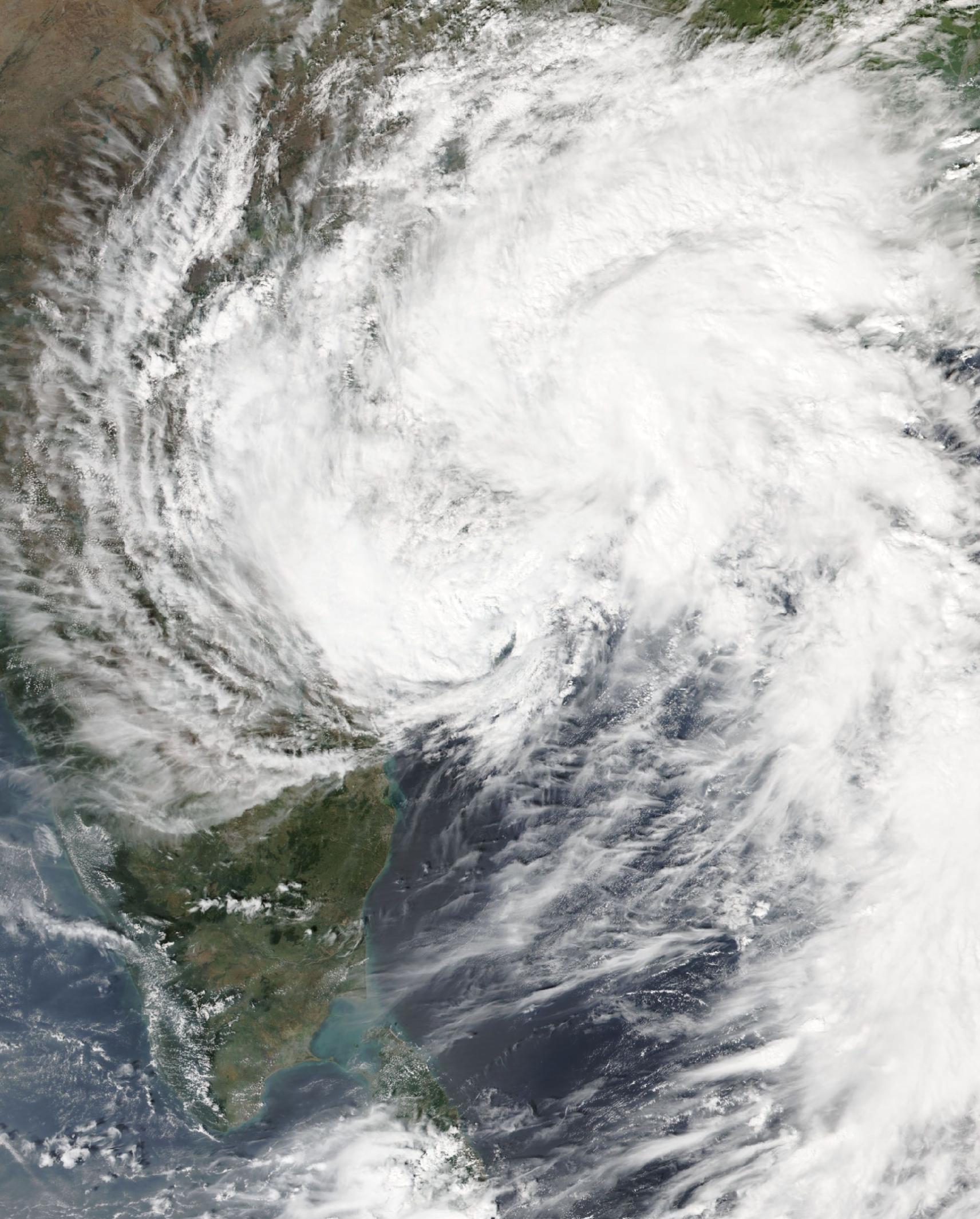
Cyclone Arnab made landfall on Wednesday, October 28 in the state of Andhra Pradesh, in eastern India. It has left at least three people dead, according to the Reuters news agency.
How it arrived
The India Meteorological Department classified it as a very severe cyclonic storm, the third-highest category on its scale.
Winds of 125 to 135 km/h were expected, with gusts of up to 150 km/h, and a storm surge of up to a metre and a half in low-lying areas.
More than 12 million people live along the cyclone's expected path.
The damage
Andhra Pradesh was the worst-hit state. Two of the deaths were caused by a falling tree and an electrocution.
The state's chief minister, Chandrababu Naidu, reported at least 180 houses destroyed and 220 trees brought down. There were also ruined crops and power cuts.
The neighbouring state of Odisha suffered less damage.
A cyclone and a hurricane are the same phenomenon: in the Indian Ocean they are called cyclones, and in the Atlantic, hurricanes.
Mass evacuations
Before it arrived, authorities moved more than 180,000 people out of their homes in Andhra Pradesh and Odisha. More than 2,000 shelters were opened and more than 30,000 fishing boats were secured.
Flights were suspended at three airports, trains were cancelled and schools closed.
Even Nepal suspended high-mountain trekking permits for three days because of the rain and snow the cyclone could bring.
More stories on video
This story is web-only. Every week on our social media we tell the stories behind brands and the news.
Do you think your country is ready to evacuate so many people ahead of a hurricane or cyclone?
Tell us in the comments on our social media.
Sources (in Spanish)
- Muertos, daños, evacuados y aeropuertos: Reuters vía KFGO (28 de octubre de 2026).
- Lugar de llegada, vientos, refugios y barcas: Euronews (28 de octubre de 2026).
- Población en riesgo y previsión: Al Jazeera (27 de octubre de 2026).
Photos are from Wikimedia Commons under free licenses; the author and license are shown under each image.