Home › News › Mini-brains and braille
News · ScienceLab-grown mini-brains read braille: the first step toward computers made of neurons
Scientists at the University of Bristol connected brain organoids to a touch sensor. One alone got 61% of the letters right; three together, 83%. They don't learn or think, but they could use far less energy than a chip.
Translated from the original Spanish article. Read in Spanish
News published on October 29, 2026. The situation may have changed since then.
Some mini-brains grown in a lab have managed to recognize letters in braille. The feat was achieved by a team at the University of Bristol, in the UK, and published in the journal Frontiers in Artificial Intelligence.
What mini-brains are
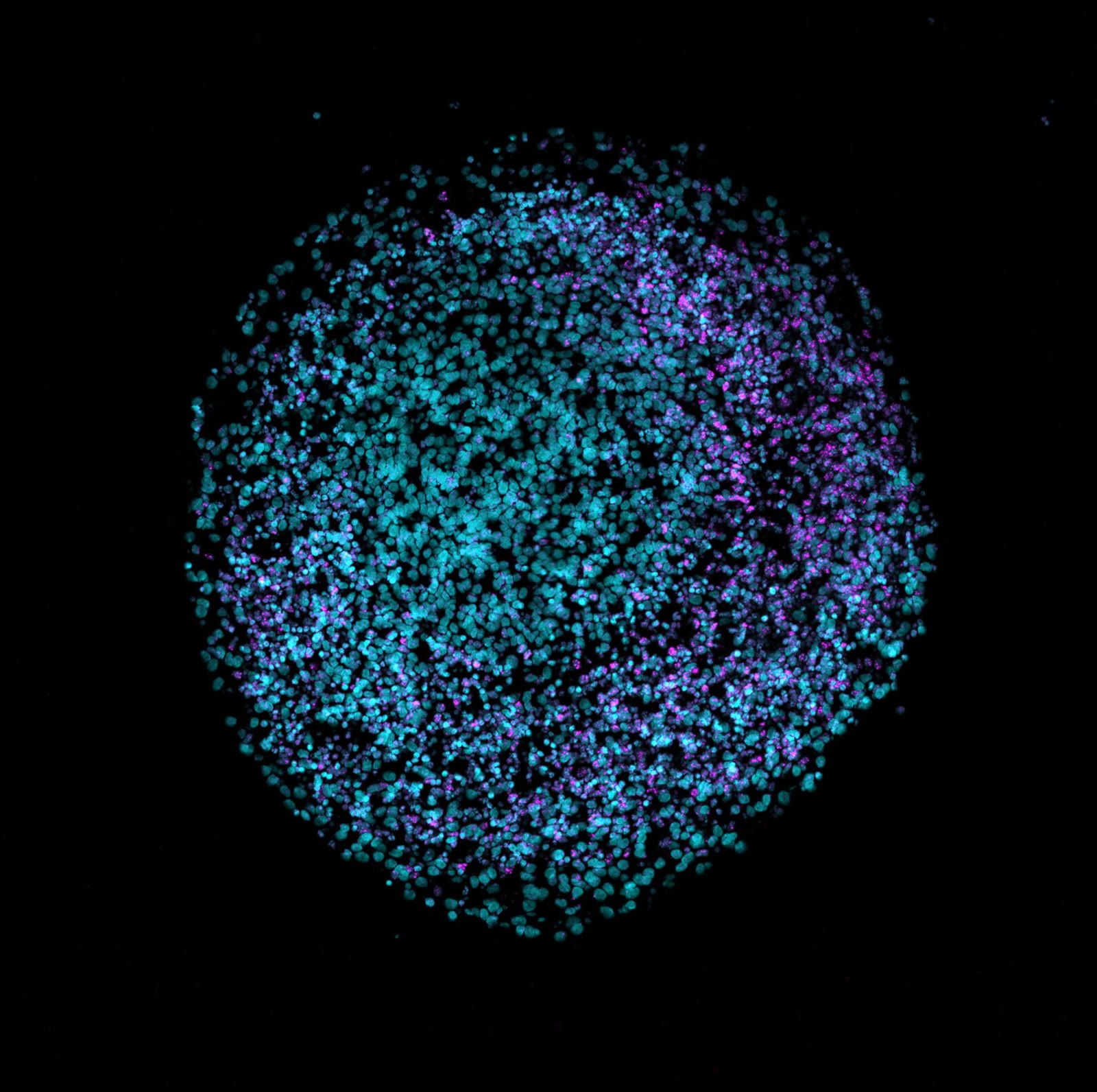
They are called brain organoids. They are little balls of tissue less than a millimeter across, made of about 10,000 human neurons. They are not a complete brain: they lack many parts and do not think.
A human brain has about 86 billion neurons: an organoid has around 10,000.
How the experiment worked
A touch sensor, like an artificial fingertip, touched the 26 letters of the braille alphabet. Those signals were turned into small electrical pulses sent to the organoids.
Then the scientists read the neurons' electrical activity to see which letter each one had "felt".
The results
One organoid was right 61% of the time.
Three organoids together rose to 83%.
What it's for
The goal is biohybrid computing: computers that combine living neurons with electronics. Their big advantage could be that they use much less energy than silicon chips, which matters now that artificial intelligence consumes so much electricity.
What not to exaggerate
The authors themselves explain that the organoids processed the information but did not learn. A computer made of neurons is still a long way off.
More stories on video
This story is web-only. Every week on our social media we tell the stories behind brands and the news.
Would it scare you or seem like progress if future computers used neurons?
Tell us in the comments on our social media.
Sources (in Spanish)
- El estudio y sus resultados: Frontiers y Universidad de Bristol (16 de octubre de 2026).
- Tamaño, número de neuronas y método: Infosalus.
- Procesamiento, no aprendizaje: Progress Educational Trust.
Photos are from Wikimedia Commons under free licenses; the author and license are shown under each image.